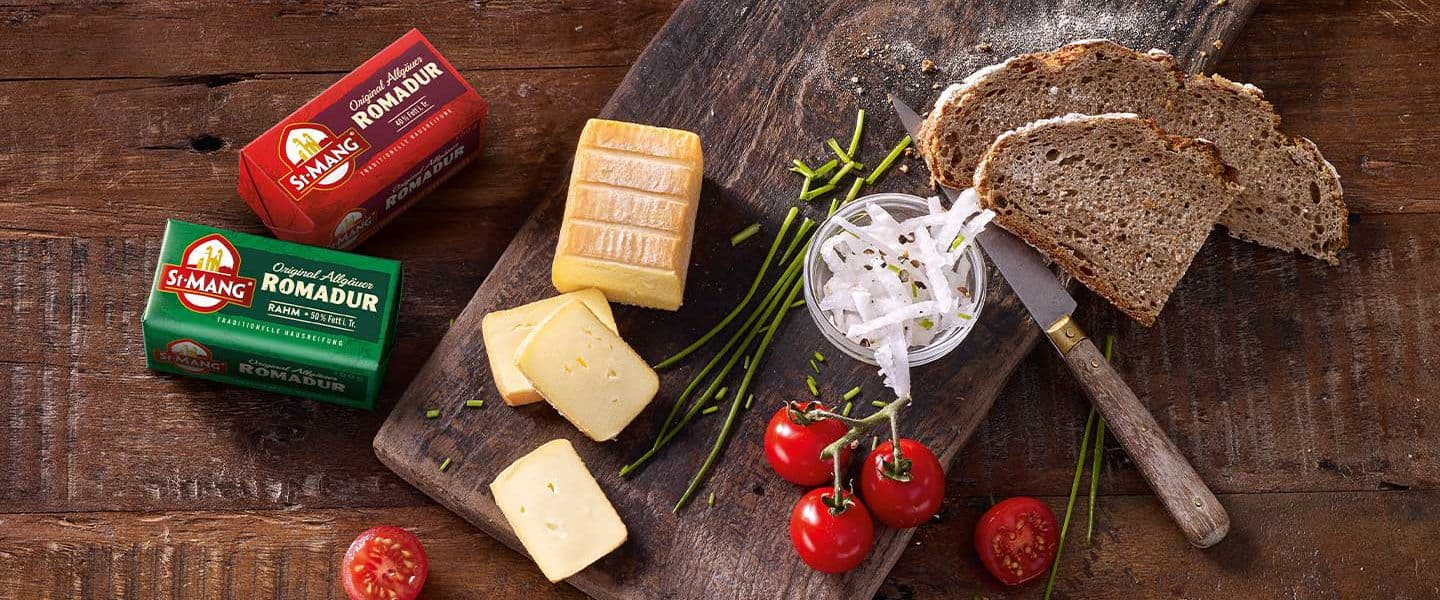
Every intimidating cheese deserves a gentle introduction, and Limburger has Romadur: its smaller, milder little brother. Same smear-ripened brick family, same orange rind, same southern-German soul — softer-spoken, and sold in small foil-wrapped bricks. If Limburger is the deep end, Romadur is the steps.
The story
Romadur comes from the same washed-rind tradition as Limburger, made across southern Germany and Bavaria. Champignon’s St. Mang line is the classic expression — the small brick with the soft, salted orange rind that taught generations of Germans that washed-rind cheese wasn’t something to fear. St. Mang notes the small format ripens through faster, keeping everything in balance: the pungency present, the gentleness intact.
What it tastes like
Pungent, but the kind you can talk over. Soft salted orange rind, yellow paste, a savory depth that hints at Limburger’s funk without committing to it. This is the “gateway” washed-rind in the truest sense — it trains your palate for the bigger bricks.
Flavor profile: intensity medium · funk medium · salt medium · creaminess medium
Aging: not stated by the maker — St. Mang notes the small format ripens through faster · Texture: soft, yielding brick
How to serve it
On dark rye with sweet mustard — the training-wheels plate. Graduate to raw onion and a full Limburger when you’re ready. Room temperature, as with all washed rinds.
Drink with it: A Dunkel or Märzen keeps the Bavarian frame; an off-dry Riesling works the same mellowing magic it does on Limburger.
Finding it in America
No current US retail stocking could be confirmed — but St. Mang is a Champignon brand line, and Champignon North America (Englewood Cliffs, NJ) is the exclusive US importer. This one lives in the “ask your cheesemonger” category; the St. Mang branding is what to ask for by name.
Related: Limburger · What to drink with washed-rind cheese · Meet the maker: Champignon Hofmeister