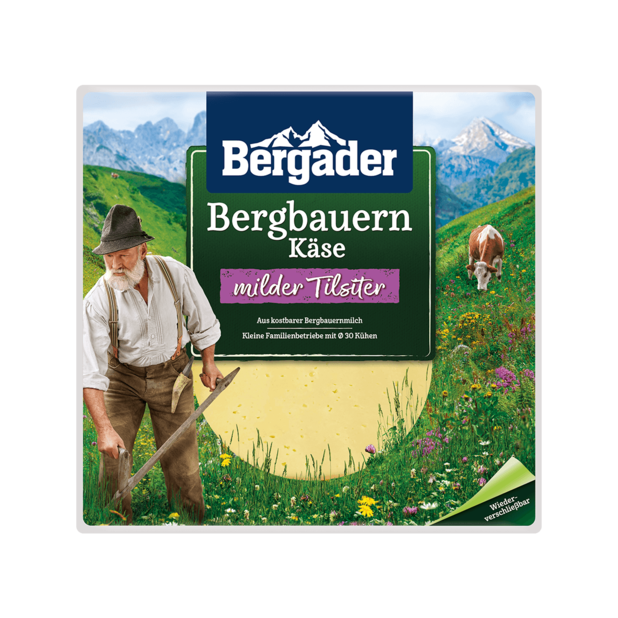
Tilsiter is named for a town that no longer exists in the country that named it. Created in the mid-19th century by Prussian-Swiss settlers in Tilsit, East Prussia — today Sovetsk, Russia — it migrated west with German cheesemaking and has been made in Germany since 1920. A cheese with a lost homeland and a second life: that’s a story worth tasting.
The story
The Prussian-Swiss settlers of Tilsit built a semi-hard, smear-ripened table cheese in the Dutch-German tradition, and German dairies carried it forward after the population displacements of the 20th century redrew the map. “Holsteiner Tilsiter” survives as a protected German brand — a national trademark rather than an EU PDO — while Tilsit-style cheese is made by dairies across Germany, including Bavaria.
What it tastes like
Firm with irregular holes and cracks, a dark-yellow rind, and a moist, creamy paste. Young Tilsiter is mild and tangy — an easy table cheese. With age it turns more pungent and assertive, the smear-ripening making itself known. Look for versions spiced with caraway or peppercorns, the traditional seasoning that lifts the whole cheese.
Flavor profile: intensity low-medium (young) → medium-high (aged) · tang medium · pungency grows with age
Aging: ~2 months rest after production · Texture: firm, with holes and cracks
How to serve it
Cube it into salads, where the tangy edge earns its keep — or go hearty: thick slices on brown or rye bread, the northern-German way that followed the cheese west. Room temperature.
Drink with it: An unfiltered, malty Kellerbier matches its tangy, yeasty edge; a Dunkel is the safer dark-beer bet.
Finding it in America
Tilsit-style cheese appears in the US mostly through German and European import lines rather than as a named Bavarian product. Ask for “Tilsiter” at a German deli or specialty cheese counter; the caraway-seeded version is the one to request if they have a choice.
Related: Allgäuer Bergkäse · What to drink with semi-hard cheese · Hearty breads and the cheeses that need them